
The Pillars of Meaning
In my previous post, I resolved to examine the data accumulated in the contents of this blog to discern what experiences have so far made life meaningful and satisfying to me. In what was at the time a startling, true epiphany, I realised that my past efforts in documenting these things could be used to infer general principles that I could use in the future – my past self had unintentionally gathered data for me to use now. In the eight months since that post, I decided to sit with these pillars of meaning, and let them lead me. I decided to actively focus on cultivating experiences that leaned into them and feel the results, as well as recognise the relevant experiences that already exist around me and mindfully, intentionally focus on them.
The results have been quietly satisfying, at once subtle and deep. I listed the pillars of meaning in my previous post, but those were one-sentence descriptions. Let me expand on them somewhat.
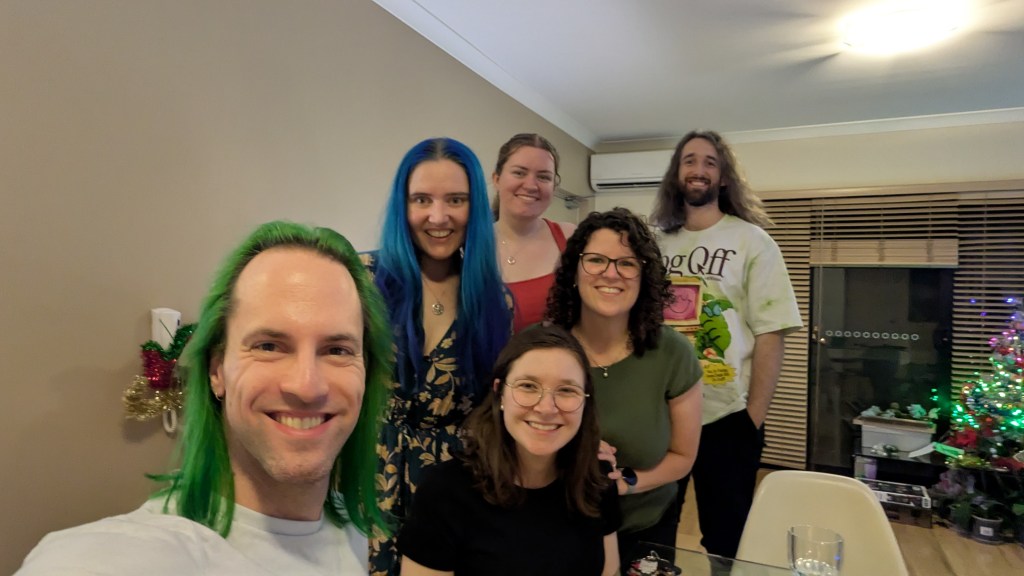
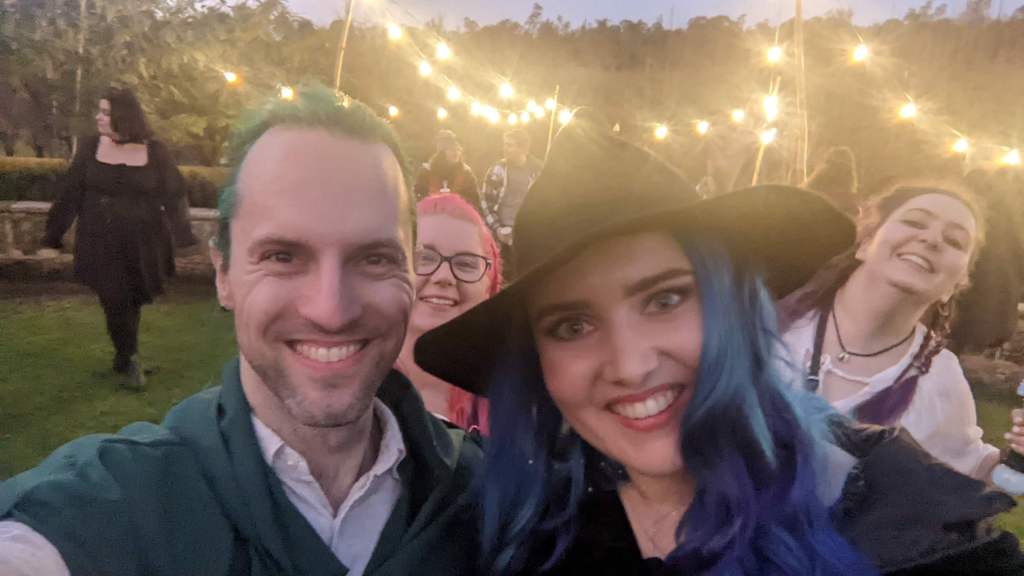
- My connections to the people I love. This refers not just to the obvious one of my love for Kiara, my life partner. I’m mostly referring to platonic love, since platonic relationships are the most frequent ones we have (unless we are incredibly lucky, or incredibly isolated). The connections should preferably be two-way, ones where I can put in effort to love and support the other, and in turn be loved and supported by them.
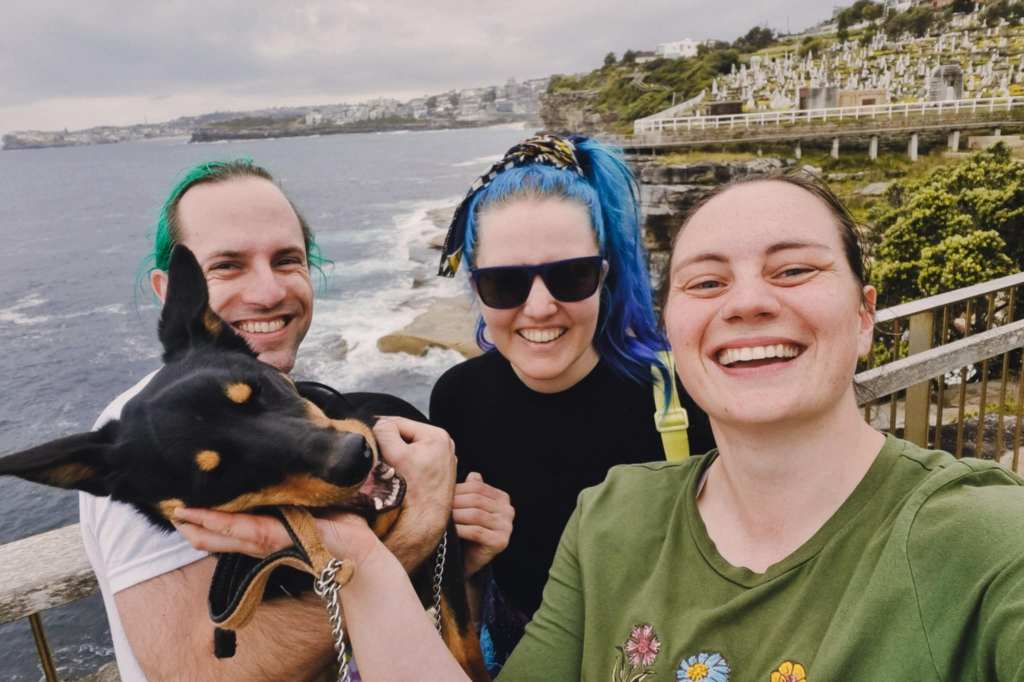
- Travelling and seeing new places. When routines start to become stale, when the everyday experience of life starts to turn monotonous, travel is the best way of injecting a flood of novelty into it. Travel enables new experiences, new perspectives, which is of itself valuable and meaningful. Crucially, it also revitalises my enthusiasm for my “normal” life – by divesting myself of my normal routines and comforts, I learn what it is about those that I value, and therefore appreciate them more.
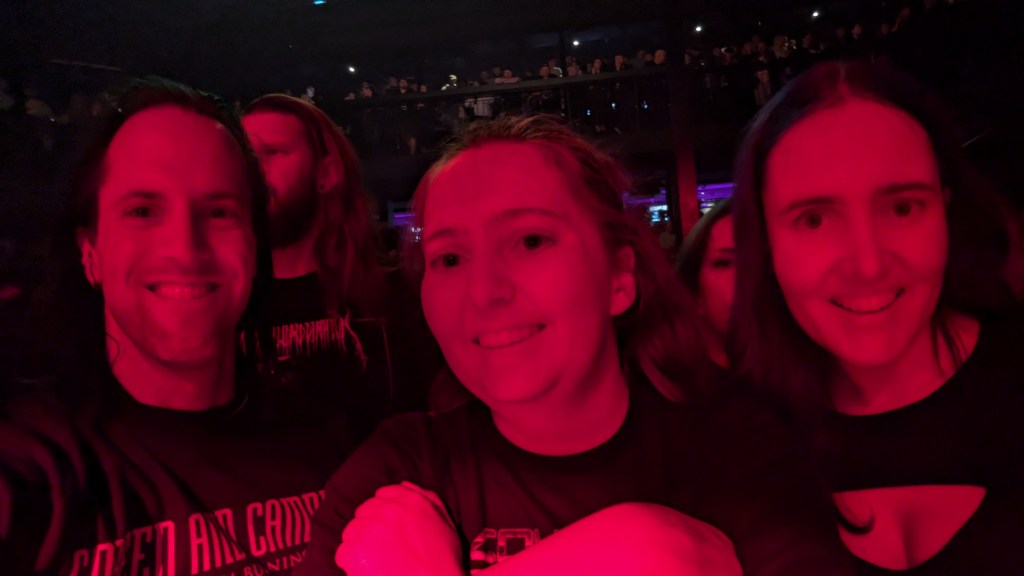
- Music – the ordinary listening experience to form the foundation, and live shows as the capstone. Most of my creative expression tends to be word-based, or roleplay-based, both of which have rules and structure and a certain linearity to them, at least the formats I practice them in. Music has this as well, but its way of enabling emotions requires far less elaboration – music doesn’t need to introduce a relatable character for the listener to invest themselves in, spend time building that character up, and then have something perilous happen to them to make the listener fear for their life, just as one example. A song can hit you with a twenty-second arrangement that bypasses all of that and strikes directly at your emotions for no reason you can name. I value music for this so highly because it encourages me to break the bounds of my own storytelling. As for the impact of live shows, see my previous posts for exhaustive detail on this.
- Creating and storytelling, on my own but especially with others. Stories are fun. Making up worlds and characters is incredibly fun and rewarding. Doing it with your friends makes it doubly so; books exist to be read, after all. But there is a deeper value cultivated by storytelling, or the consumption of stories: empathy. Stories allow us to imagine and put ourselves in the place of people we wouldn’t normally identify with, and in doing so humanise them. I don’t mean to imply that my storytelling does or even aims to do this on a regular basis, but it is a reason that I value the practice over just the entertainment and escapist aspects of it.
You may have noticed that these pillars have some overlap, and indeed they can play off of each other and intertwine. Storytelling with people you love hits pillars 1 and 4. Travelling to see a music festival or concert hits pillars 2 and 3. I had the unique experience last year of travelling with Kiara to see Coheed and Cambria, a band we both love that creates album-length scifi stories with their music. This incorporated all four pillars of meaning to varying degrees, the travel perhaps the least since we were only going to other Australian capital cities which we’d seen before.
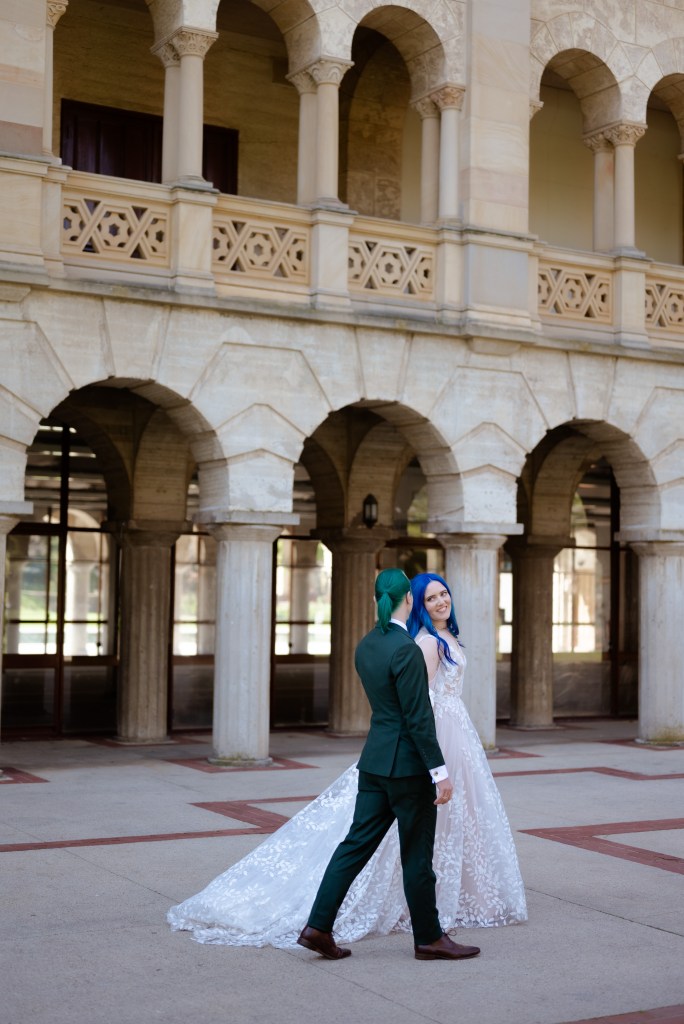
The last eight months have had many incredible experiences, including my own wedding and, just recently, Kiara and I buying our first home together. These do potentially skew my perspective on the intervening time somewhat, especially the wedding – have I been getting such emotional satisfaction from my relationships with the people around me because of this huge event that highlighted them all, or has the event served merely to amplify what was already there? It is probably, hopefully, both.
By far the pillar that I’ve directed most of my attention to is the first. I would say my musical and storytelling habits and immersion are already well-trained and quite deep (though I have picked up my guitar and dusted off my amp for the first time in a long time and that has been quite fun). Travel, of course, requires organisation and funding that makes it more discrete in implementation, whereas social relationships can be continuously nourished by small daily or weekly steps. Some of these have borne more fruit than others; relationships are of course two-way, and require compatibility, response and effort from both sides. If they are not reciprocated, there’s little I can do beyond remaining open to that reciprocation in the future.
I am calling them relationships because the last few months have broken down my categorisation of friendships somewhat, and I am starting to see relationships as existing on something of a spectrum, or a grab bag of behaviours that apply differently to different people. Obviously certain of these behaviours are restricted to Kiara, but take, as an example, hugs. Hugs are great. I hug Kiara, and I hug my family, and more and more over the last year or so, I hug some of my friends. Some of my friends welcome hugs, others are more reticent, and I’ve been taking care to observe their reactions and whether they initiate hugs or not. Is my friendship with those that don’t prefer hugs lesser because of it? Of course not. Some of these “non-huggers” include Adelaide friends that I’ve known for many, many years. Video games often express progress in relationships in a linear manner, and physical contact like hugs tends to be a milestone in those. Real life is not like this. Relationships contain an assortment of different ways of showing affection that need to be tailored to the particular person, and not all those ways can be neatly categorised.
One of the things I miss about Antioch is that people there were not shy about showing physical affection in platonic contexts. It was not uncommon to witness people cuddling up while having a deep conversation. In the last year or so I’ve started to miss that. One of the things I’ve learned from my therapist is to ensure that I’m not “dead from the neck down”. Most often this refers to exercise, but I apply it here as well. Laughter and sharing stories are great, but sometimes you just want to hug your friends. It’s the music thing again – some things have a way of bypassing more cerebral expression and hitting the emotions directly. Hug your friends, y’all (if they want you to).
Let me return to the point. I’ve focused on cultivating relationships to varying degrees of success, and it’s made me pay attention to how I feel about different friendships not just in terms of the person on the other end, but in the length of the friendships. It’s been a long time since I’ve made a new one-on-one friend, and for a good while that novelty was exhilarating. I would get nervous before meeting up, dwell in gratitude after they’d left, and impatiently look forward to the next time.
Contrast that with a gaming session with eg any of the Adelaide crew, which has a drastically different timbre. There isn’t that nervous excitement, that not knowing, that unpredictability. Instead, there’s total comfort, familiarity, safety and trust. I can be my fully authentic self around them with zero filter and know that I am safe. And Kiara is basically an extension of myself at this point – we are of course different people, but our lives are so entwined that it is like we are two minds in the same body, or two planetoids orbiting a common centre of gravity, so that they form a single gravity well.
That sense of novelty is starting to ebb away from the newest friendship I’ve made, and it is beginning to morph into something a little more familiar. I have mixed feelings about this. That novelty, that not knowing what to expect and the thrill of uncertainty around whether our friendship would solidify is what heightened my awareness of it in a way that I haven’t felt in many years. It has been delightful to feel again, and I’m going to miss it when it’s gone. Does that diminish the appeal of the friendship? Of course not. When I think about the faces and voices of people that surround me my heart fills with gratitude, whether I’ve known them for a mere few years or for a significant portion of my life. But it has been delightfully interesting to see what my emotions have been doing as this new person has entered my sphere.
Novelty, then, and diversity of experience has been a keystone of the months since my last post. I do wonder frequently if this is an overriding factor, something that influences satisfaction and meaning as much as or even more than the pillars I’ve already identified. Novelty does come up in the pillars themselves. Travel, obviously, is that, and social connection and storytelling contain it as well. But I wonder, if I didn’t travel, didn’t make new friends or nurture existing ones, listened to the same music (which, to be fair, I tend to do anyway; it’s one area that I like to dive deep and narrow), and didn’t do much storytelling but experienced novelty in other ways, would I still feel like life was satisfying and meaningful? I struggle to think of how novelty might be introduced without hitting those things that I’m deeply interested in. New, single-player video games that don’t have significant story components, maybe. A crazy change of diet. A new job, maybe. I don’t know. I am certainly not going to discard the pillars so soon after I’ve discovered them in an attempt to validate this; that sounds miserable, and while I like to be a little bit scientific in my pursuit of meaning and joy, a lot of this is driven by emotion and instinct, not analysis. Still, it’s something to keep in mind and pay attention to.
I don’t consider the question of meaning and joy solved, and I doubt it ever will be completely. I have found parts of the answer that sustain me for the time being, but I remain open to future changes.
Time
A final anecdote, and another digression. I have, for the first time (and this is a novelty of a distinctly more neutral, or perhaps even negative variety), noticed my age. More specifically, I am now frequently associating with people significantly younger than me. When they tell me about some of their experiences and feelings, it is tempting to put them in an “I’ve seen that before” box, and I can imagine that impulse only increases the older one gets. I can think back to how I felt at that age and in that context; I can imagine that I understand how they are feeling now. We have all had the frustrating and demeaning experience of an older person acting as if they understood how we felt. Offering advice and suggestions when they are asked for is one thing, but presuming to understand how someone else feels, regardless of age, just because you have experienced something you believe is similar, is presumptuous in the extreme and an urge that needs to be moderated.
When we are tiny children, every minor setback is the worst thing that’s ever happened to us, which is why we bawl and scream (apart from not knowing how to communicate otherwise, having undeveloped brains, etc). This doesn’t stop as we get older, and so something that is happening to someone for the first time (a breakup, to take a contrived example that I have never actually experienced) that we have gone through many times over will feel completely different. Again, we’ve all had the horrible feeling of our feelings or perception being dismissed by someone older who has seen what they think is the same thing one too many times. I have been surprised by the urge not to dismiss (I would hope I have more empathy than that), but to think I understand by only hearing a general situation. I have offered unsolicited advice a couple of times and have only realised afterwards. An awareness of the age difference between me and another person is to some degree inevitable, but I can serve not to exacerbate it by not being an ass, even accidentally. It’s something to note.
Popular culture puts the spotlight on people in their teens and 20s as the stars of the show of life. People far older become mentors and wise teachers, especially in fantasy. People in between this are far less clearly depicted (or perhaps I just need to expand my sources). I would like to fully accept and be at peace with the passage of time and its effects on me, but I won’t lie and say that I’ve reached that point, or even that I’m actively working on it. I’ve noticed it, and the media’s messaging around this does needle me and affect my self-esteem, but it is something that I’m trying to put aside for the most part and just focus on doing what I aim to do: live a satisfying, meaningful, and joyful life.



 Dominik Jarco